
In this article, we’ll discuss what a difficult conversation is, how it specifically relates for highly sensitives and why it’s especially important for HSP entrepreneurs to engage in them. We’ll also go into some details and key concepts to support a better understanding and then walk through how to prepare for a difficult conversation.
What is a difficult conversation?
A difficult conversation is pretty much exactly what it sounds like. It’s a conversation, that we perceive is going to be difficult. A conversation that we are afraid to have. We are afraid to have this conversation because we anticipate that it is going to be a conflictual conversation.
References and Term Origins
The term “difficult conversation” originated, as best can be identified, from the book Difficult Conversations: How to Discuss What Matters Most by Douglas Stone, Bruce Patton and Sheila Heen. The book was originally published in 1989 and the book came out of what was referred to as the Harvard Negotiation Project.
The original definition of “difficult conversation”, according to the book, is anything you find difficult to talk about. What’s added in further depth within the book is:
- any time we feel vulnerable
- our self-esteem feels as if it’s at stake
- when the issues at stake are important and the outcome, or what is being discussed, is something we care deeply about
- the people we are discussing it with, we care deeply about
According to the University of Delaware School of Psychology, a difficult conversation is a planned discussion about an uncomfortable topic or a negative experience where the goal is to share different perspectives, build mutual understanding and develop respect. From this concept, the key things to highlight are “planned discussion”, “mutual understanding” and “develop respect”. The intent of a difficult conversation is not to persuade or win.
Brené Brown refers to a difficult conversation as “a rumble”, defining it as a tough conversation or a meeting defined by a commitment to lean into vulnerability, to stay curious and generous, to stick with the messy middle of problem identification and solving.
Difficult Conversations as a Highly Sensitive
A difficult, or conflictual, conversation is a concern to any human being, but for an HSP, a conflictual conversation is especially a concern because it can cause the highly sensitive nervous system to shift into overdrive. A conflictual difficult conversation is a nut that the highly sensitive monkey mind can go to town with – thinking about it, analyzing it, projecting about it, becoming anxious over it, over-processing about it. Trying to work out every single way that the difficult conversation could possibly be had, without any conflict whatsoever. Or how the difficult conversation could be avoided, so that there won’t have to be any conflict or difficulty, and then therefore no sense of overwhelm. Around and around, the monkey mind will happily toss that nut.
As highly sensitives, we are particularly concerned about conflictual difficult conversations out of the anticipation that the difficult conversation will include anger – the acting out of anger by ourselves or the other. For anger coming at us, we’re concerned that we will not be able to handle our highly-sensitive nervous system becoming flooded with the other’s anger. Leaving us in that space of fuzzied mind, constricted throat, squelched heart, and punched stomach. For anger we’re directing at others, our fear is that out of so much suppression for so long, our own anger will erupt uncontrollably.

Why It’s Important for HSPs to Have Difficult Conversations
As an HSP, avoiding difficult conversations takes away your power and keeps you stuck in a false belief that because of your highly sensitive nervous system you can’t handle it. That it is too overwhelming for you – too overstimulating for your nervous system to tolerate. For an HSP entrepreneur, difficult conversations are especially important because they are a key component to unlocking our access to open financial flow.
To avoid difficult conversations is actually disempowering. To try to overprotect ourselves from difficult conversations leaves us mute, furthering our experience of being unseen and unheard, deepening our experience of feeling outcast, othered, isolated, and ultimately, by avoiding or trying to overprotect from difficult conversations, leaving us victim to our highly sensitive nature.
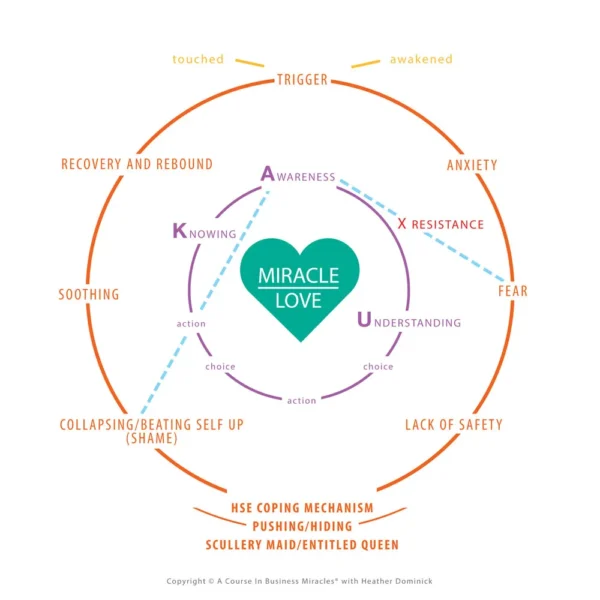
By avoiding difficult conversations, we are then living the limiting belief that unbearable emotions are your burden. And that you must go to your grave having this experience. And sadly most do go to their grave believing this and living the unbearable Emotions Cycle, or, for us as highly sensitives, known as the Highly Sensitive Coping Cycle, which is you feel an unbearable emotion, you stay silent, you suffer with it, you do anything and everything you can to numb it. Overeating, overdrinking, overworking, overshopping, overorganizing. Any attempt to numb the feeling (aka cope with the feeling), to then beat up on yourself for not being able to bear the unbearable emotion, to then numb enough to somewhat recover until you do it all over again. This is not the way of Highly Sensitive Leadership.
Instead, we want to choose a space of empowerment. We want to choose a space of V and V energy (visibility and vulnerability). We want to choose a space of confidently voicing our needs, our wants, our desires, our ideas, our inspirations, our intuitions. And we want to be doing this in all parts of our business and life.
Benefits of Having a Difficult Conversation
- Clearing up misunderstandings
- Gaining a better understanding of another person’s perspective, needs, concerns
- Allowing space for your concerns to be understood
- Ultimately, potentially finding creative solutions that will make the situation better
- And the most important, developing the muscle to create whatever you want in your business and life.
As you master difficult conversations, the fear of not being able to handle potential conflict or nervous system overwhelm dissipates, and it no longer has a hold on you, your beliefs and your behavior. You’re then able to show up in all the ways that you’re being called to show up as a Highly Sensitive Entrepreneur and Leader. And that is the doorway, the muscle to create whatever you want in your business and life.
Understanding and Preparing for a Difficult Conversation
Let’s take a deeper look at difficult conversations, the way to approach a difficult conversation and how to go about preparing yourself for and working through a difficult conversation.
Key Concepts to Understand
First, let me outline some key things to understand about difficult conversations when preparing to have one – the 3 types of conversations, what a difficult conversation is not, and the 4 things that can derail a conversation. These are important things to have in your awareness to give you a framework to better prepare and approach a difficult conversation.
The 3 Types of Conversation
Going back to the original book, Difficult Conversations: How to Discuss What Matters Most, there are three types of difficult conversations:
- The “what happened” conversation, which is usually a disagreement about what happened or what should happen.
- The “feelings” conversation, which is the invitation within every difficult conversation to ask and answer questions about feelings.
- The “identity” conversation, which is the type of conversation when what’s at stake is discussed. “What do I stand to lose or gain? What is this impact (ie. on my work, my marriage, my self-esteem)?”
All three types of difficult conversations can happen in all different areas of life and business and work. What I want to reiterate is that a difficult conversation is planned and with someone or about something that you care deeply about.
What a Difficult Conversation is Not
A difficult conversation is not:
- a conversation that you spring on someone, and you also are not obligated to have a difficult conversation that is sprung on you.
- about you challenging someone, and this is not about being beholden to someone who decides to challenge you
The 4 Ds That Can Derail a Difficult Conversation
- The first is denial, where the other person rejects the information that you’re putting forward, claims it to be untrue or completely shuts it down
- The second is deflection, where the other person changes the subject, “I can’t believe you’re telling me this. I don’t want to hear this.”
- The third is disruption, where the other person shouts, swears, sobs, goes into any kind of external drama
- The fourth is dumping, where the other person tries to make everything about the difficult conversation your fault
These are all valuable to be aware of so that at any time in the midst of a difficult conversation, you can choose to stop.

The Way to Approach a Difficult Conversation
A difficult conversation can be possible, when the regulation of one’s emotions is done consciously and constructively. The way we can do that, according to the Harvard Negotiation Project, is through appreciation, affiliation, autonomy, status and role. For our purposes we’ll touch on the first three here.
Appreciation
Appreciation, to either approach any intentional difficult conversation with appreciation, and/or to reach for appreciation, when we find ourselves suddenly in the midst of a difficult conversation, that we perhaps were not anticipating. For years now, I’ve been teaching what I refer to as the Appreciation Sandwich, as a way to communicate something that feels difficult to communicate. That you start off the difficult communication with appreciation, and you end the difficult communication with appreciation. In between, is when you address the difficulty. To start off with something that you appreciate.
Let’s use attending an important event as an example. If you need to let someone know, that you are not available in-person, by phone, by email, by text for these next hours, you can start the communication by saying, “I really appreciate,” fill in the blank. “I really appreciate how we’re so often in touch. I really appreciate that you are my daughter. I really appreciate how much I can so often be available for you, and that is not possible over these next few hours.” The appreciation is also delivered with a true tone, and energy of appreciation, not only the words.
What can help you access that appreciation, especially in those moments when you’re feeling anything but anything, but, is to take a deep breath – deep breath in, and let it out. To change your thought pattern, change your breath pattern.
Affiliation
Affiliation, this is the recognition that any difficult conversation, is not happening in a vacuum. It is not up to you and only you. There are two or more people involved, in a difficult conversation. What can really support you in a difficult conversation, is to take responsibility for your part. Not go into a difficult conversation, believing that the only resolution is for the other person to change.
When you are in a difficult conversation, to language, “This is what I am needing, and this is what I am willing to do as my part to experience it. What, if anything, are you then willing to do?”
Autonomy
Autonomy, this is about communication, and not making decisions that involve someone else, without them knowing about it. That includes assumptions about how you believe they will respond, or react to a request. This is where we access Assumption of Positive Intent, which is assuming that everyone is doing their best. The world is not out to get you.
Not making a decision without including another person is what the Harvard Negotiation Project refers to as ACBD, Always Consult Before Deciding (originally coined by Roger Fisher), and this goes both ways. You have every right to ask for this as well, of those you are in relationship with. When we don’t ask, we are feeding the isolation of our HSE Shadows, and of our Coping Mechanisms.

How to Support Yourself with Mastering Difficult Conversations
First, prepare.
Remember, it’s a planned conversation, so be sure you understand what type of difficult conversation you are entering into and prepare yourself practically and energetically.
From a practical perspective, schedule a time with all involved that best supports what’s needed for this difficult conversation to be an empowered one. Some things that may be helpful to consider might be:
- What time of day makes the most sense for all involved?
- How much time do you think will be needed so that everyone involved can be fully present and available without feeling rushed?
- What distractions or interruptions might happen and how can you proactively prepare for and address this?
- What environment might be most supportive?
For example, for some difficult conversations maybe it makes the most sense to have it on a weekend when you are able to have the conversation in two parts, leaving time for each to muse on what is shared during the first part before reconnecting again for the second part. Or maybe it would be best to have a difficult conversation during a side-by-side walk outside, especially if one or more of the people involved are men, which has been shown to increase men’s comfort level and lower feelings of “competition”.
From an energetic perspective, do what is needed ahead of time to manage your nervous system and mindset so you can fully show up in your highly sensitive strengths as opposed to your highly sensitive shadows. Well before you enter into a difficult conversation, you can use tools like we provide in our HSE Training Kit: Stop the Overwhelm and our Highly Sensitive Leadership Training Programs to proactively prepare yourself. For example:
- Use the Order Form to the Universe (OFTU) to get clear on what you do and don’t want in relation to this difficult conversation
- Use the Scripting tool to prepare yourself for how you would like the conversation to go and bring clarity to your thoughts in order to support in communicating clearly
- Use the Autowriting tool to receive inner guidance, access divine wisdom, and make decisions about what’s needed to support the highest good for all involved
Just before you enter into a conversation, support your nervous system energetically with tools like:
- the victory power pose
- butterfly hug
- Quick Coherence® Technique
- or simply putting your hand on your heart

Two, practice.
First, by continuously showing up to have difficult conversations. Start with conversations that you view as only slightly “difficult” or uncomfortable working your way up to conversations you perceive to be more and more difficult or conflictual. Have the mindset of curiosity as you enter into these conversations and self-assess after each one – what worked? What didn’t work? What could you do differently the next time? Bringing those insights into every next difficult conversation you have.
Third, process.
Recognize that the art of mastering difficult conversations, or anything for that matter, is a process. It does not happen overnight, it is a process that is built from ongoing preparation and practice. So re-read this article multiple times. Get the tools and support you need to “do the real work”. For highly sensitives, being in an aligned community like we have in the Highly Sensitive Leadership Training Programs can be an especially powerful way to find this kind of support with “doing the real work” to stay in process with mastering difficult conversations, or mastering anything as a highly sensitive in business and life. With an aligned community forum, weekly roundtables, one-on-one coaching calls, and one-on-one private mentor calls you can ask for support, ask for a space to be held for you as you go into a difficult conversation, or ask for insight on your self-assessments. All of these can accelerate your process of mastering difficult conversations so you can shift a difficult conversation into an empowered conversation.
Is there a difficult conversation that is meant to happen today?
Is there a difficult conversation that is meant to happen today? For an HSP entrepreneur this could mean having a selling conversation, asking for a speaking engagement, working with your team, communicating with vendors, website designers, photographers, setting boundaries with your family, a discussion with people who fix your computer, who provide you with a new phone. Anyone else in the world that you might have to relate with, in order to be in business, because guess what? Being in business is about relationships. Relationships are difficult, because human beings are difficult. Being in business is about having difficult conversations.
Instead of trying to be in business by avoiding ever having to have a difficult conversation, and therefore having a difficulty being in business, why don’t we instead enter into having difficult conversations while being supported in community, through mentoring, and through coach team support.

Recommended Resources
Resources mentioned in this article and other helpful materials:
- Harvard Negotiation Project – concepts referenced in this article
- Difficult Conversations: How to Discuss What Matters Most – book by Douglas Stone, Bruce Patton and Sheila Heen
- Beyond Reason: Using Emotions as You Negotiate – book by Roger Fisher and Daniel Shapiro
- University of Delaware School of Psychology – additional helpful resources
- Let’s Rumble – article by Brené Brown
- Onward: Cultivating Emotional Resilience in Educators – book by Elena Aguilar that discusses the emotions cycle
- Why You Stand Side-by-Side or Face-to-Face – Psychology Today article on the science of posture and position
- HSE Training Kit: Stop the Overwhelm – training and tools to support with managing your energy, including the Order Form to the Universe, Scripting, and Autowriting tools mentioned in the article
- Highly Sensitive Leadership Training Program – details about our training program designed specifically for HSP entrepreneurs (HSEs) on leading as an HSP
- Your Body Language May Shape Who You Are, TED Talk with Amy Cuddy – video on power poses including victory power pose mentioned in article
- The Butterfly Hug Method for Bilateral Stimulation – PDF on the butterfly hug originally developed by Lucina Artigas
- The Butterfly Hug with TYF Support Group, YouTube – video demonstration of the butterfly hug
- Quick Coherence® Technique by HeartMath – video demonstration on the Quick Coherence technique